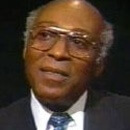
Originally submitted on November 6, 2019. This would have happened in 2020 - but, as we all know, the COVID-19, intervened.
Hello All:
I almost want to say it's about time, but I won't.
I'm
responding to Carol Black's request for notes on Doc Hamilton's
worthiness to receive an honorary Doctorate from Lincoln U.
These are my notes and my thoughts - from the heart:
There's
a peculiar magic about Lincoln University, that has been part of its
heritage since its inception in 1854: We either attract greatness or
transform fledglings into greatness. And that has been our M.O. for 165
years!
We are the only HBCU that gave Africa two (2) Black presidents.
We are the only HBCU that produced a Supreme Court Justice.
We gave the world the Poet Laureate Langston Hughes, Gil Scott-Heron, Cab Calloway, among others
But
one of the unsung heroes who really put Lincoln on the map in the 60s
and 70s, during the emergence of Black pride and Black power, was
Professor Charles V. Hamilton, who at the time served as the Chairman of
Lincoln's Political Science Department.
Simultaneously, he served as legal counsel for The Student NonViolent
Coordinating Committee - SNCC - an organization comprised of Black
students across the US, who came together to fight and eradicate racism,
discrimination, segregation through peaceful, nonviolent means. SNCC's
Chair at the time was Stokley Carmichael.
These
were heady times in the 60s. The March on Washington was held in
August 1963. There Kennedy was assassinated in that same year. Many
Black icons and activists - and innocents - were being executed,
primarily in the South. There was an unauthorized war in Viet Nam and
young Black men were being sent there to fight it.
Interestingly
enough Lincoln was an all Black University, whose white president -
Dr. Marvin Wachman - was current on, and concered about, issues that
affected Black people at that time. Drs. Hamilton and Wachman met at a
conference in Philadelphia while Hamilton was teaching at Rutgers.
After having had an intense conversation on the future of Civil Rights
actiivism, Wachman liked him so much he offered him the opportunity to
come to Lincoln as chair of the Political Science Department. At the
time Lincoln only had 600 students - all male. Initially Hamilton
turned it down - but Wachman gave him the same lineage of Lincoln I just
shared with you - and it was a lock! He finally agreed!
So
in the Fall of 1964, Hamilton and his family - Dona, his wife, two
daughters, arrived at Lincoln University - all male, wild, but budding
geniuses - geniuses whose minds he could challenge and encourage to dig
deeper.
Hamilton's
ties with SNCC and Stokely Carmichael fired our imaginations. Whenever
anything went wrong in the south - Mississippi, Alabama, North or South
Carolina, Georgia, Florida - Hamilton was on the next jet to represent
SNCC members and save them from lynching, incarceration and a host of
injustices that were routinely being visited on our valiant Brothers and
Sisters.
Hamilton
was Charismatic - which surely must have baffled the southern racists,
because he always emerged victorious. And when he returned to Lincoln,
practically everybody cut class to come hear the HAMILTON REPORT on what
was going on in the south.
HE WAS/IS OUR OWN PERSONAL SUPER HERO!
Doc
Hamilton resides in Chicago - he is still as erudite as ever. He is
still one of my personal heroes. Hamiltonian Politics, as we called it
at Lincoln in the 60s, was comprehensive, savvy, effective - Hamilton
has informed and been consulted my Congressmen and women, presidential
candiates, and others who know his reputation. President Obama audited
his classes!!
Doc (as we lovingly called him) and his wife Dona penned the excellent, in depth bio and analysis entitled, "Adam Clayton Powell, Jr. The Political Biography of an American Dilemma."
It was so well received they were interviewed on several news and talk
shows. It still stands as the single most comprehensive coverage of
Powell's impact on Black (and white) American politics.
Below is one of my blog posts on Doc Hamilton as well as some excerpts from various articles over the past 10 years.
Doc
also travels back and forth between Chicago and South Africa - his
first love - and maintains active communication with African leaders in
several countries - friendships forged during his tenure at Lincoln
University.
I
fully believe that Doc Hamilton is more than worthy of an honorary
Doctorate from Lincoln University. I think we would be remiss in not
doing so. I also think there should be a building and a wing dedicated
to him to house his papers - especially the papers from Black power. He
is our CHARLES V. HAMILTON.
Sincerely and loving submitted
Stay Blessed &
ECLECTICALLY BLACK
Gloria DULAN-Wilson - Emerita LU '67
ECLECTICALLY BLACK NEWS BLOG:
https://gloria-dulan-wilson.blogspot.com/2016/10/black-power-at-50-dr-charles-v-hamilton.html
THE
FOLLOWING ARE NOTES AND STATEMENTS FROM A VARIETY OF ARTICLES I'VE
WRITTEN OVER THE YEARS WHERE I MENTION DOC HAMILTON AND HIS HISTORICAL
SIGNIFICANCE
The
60s was the Civil Rights Era, but, more importantly, it was the
beginning of BLACK POWER - and our class of 1967 was the Black Power
Class - thanks to Doc Hamilton and Carmichael.
We are the BLACK POWER CLASS - Before the world even knew what BLACK POWER was about!!!
We
are the beginning of the wearing of naturals and African clothes. We
are the ones who met with Stokeley Carmichael and Doc Hamilton as they
planned the next SNCC strategies. We gave asylum to our African freedom
fighting brothers from South Africa, Mozambique, Angola, the Congo, as
well as classmates to those brothers from newly liberated African
countries such as Kenya, Nigeria, Ghana, Guinea, Mali, Tanzania, Uganda -
as you can see, I love bragging about Lincoln University.
I have always felt that I was in a
privileged space at Lincoln. Especially having the opportunity to
study political science under Dr. Charles V. Hamilton - legal counsel
for SNCC, and one of the finest and most dynamic Black men on the planet
- then and now. He was not only the most dynamic personage on the
campus, but he walked his talk - often having to go to Mississippi and
other areas to rescue members of SNCC from white racists - a bold move
when you consider that this Black man routinely laid his life on the
line to cross into the south to defend our Black heroes from racist
white judges, jailers and policemen. The entire campus would turn out
for the "Hamilton Report," when he returned, updating us on the things
that happened during his foray into the belly of the beast.
 |
| THE GREAT DR CHARLES V. HAMILTON |
Our Iconic professor went on to head
Columbia University's International Political Science Department, but
never forgot his early days at Lincoln. And we have never forgotten
him. He just celebrate his 90th birthday on Thursday, October 19, 2019 still
as active as ever.
| STOKELY CARMICHAEL - KWAME TOURE` |
The other highpoint of my Lincoln life
was Stokely Carmichael and H. Rapp Brown coming to Lincoln to consult
and collaborate with Doc Hamilton on strategies during the high point of
the Civil Rights Movement. But the icing on the cake was when Stokely
came to Lincoln in October, 1966 to enunciate the tenets of BLACK POWER
at Mary Dodd Brown Chapel - to a packed audience. It was the first time
we had heard the statement 'BLACK IS BEAUTIFUL!" and the statement
BLACK POWER! We left that assemblage feeling totally empowered.
The
following summer Dr. Hamilton and
Stokely Carmichael wrote and published the definitive book BLACK POWER.
All the research was conducted on Lincoln's campus, utilizing Lincoln
University students as interns to help with the research, BLACK POWER
was the first ever book of its kind to do a definitive, in depth
analysis of Black power and its impact and meaning to Black people -
this is the 50th
anniversary of it's publication and the book has been translated into
at least 50 languages and circulated around the world. More
importantly, it's even more relevant today as
the day it was published.

Lincoln
University was also the first Black college to
offer a full complement of African studies, as well as Swahili language
classes; African cosmology classes, and movies originating from Africa
written and produced by Africans. We read Franz Fanon, Cheik Anta Diop,
Chinua Achebe, Leopold Sedor Senghor, Kwame Nkrumah's principles; along
with WEB DuBois, Carter G. Woodson, Lerone Bennett, E. Franklin
Frazier. You name it we had it at the Vail Memorial Library. If it was
Black we had read it, were reading it, discussing it, throwing in our
own theories to boot. You could actually get a degree in African
studies long before it was popular in the rest of the Black schools.
Even Albert Einstein loved Lincoln University, and left a legacy to our
campus (that was long before we arrived, of course). Hamilton was
familiar with and conversant on their philosophies and integrated it
into his Political Science curriculum - so that we had the full spectrum
of what it meant to wield political power in a positive, pragmatic
manner.
Lincoln
University's Sociology Department, headed by Lawrence“Shabby” Foster,
was the only Black college that relied primarily on texts written by
Black sociologists Goode and Hat. It was the mainstay of our
department. From it we learned the socio-psychological effects of
racism, and how it impacted our child rearing practices.
Hamilton
is also a hero - he stood for the students on campus when the KKK had
the audacity to threaten to burn it down - to the point of securing the
perimeter of the campus with a few, well armed and valiant classmates.
In
1966, we were the students who fought off the KKK with real guns when
they burned a cross across from our campus. We posted guards at every
entry, and made it known that they could come at their own risk. They
threatened but never crossed onto Lincoln Soil. In the 150+ years of
our existence, they have not yet laid set foot on our campus. Hamilton
patroled the campus and checked in with students to make sure they were
safe.
We
were the students who had none other than the great Charles V.
Hamilton, head of our Political Science Department, as our mentor. He
was legal counsel for SNCC (the Student Nonviolent Coordinating
Committee). Students would cut classes and sit in on his class to learn
of their latest status and exploits. We were the campus where Stokely
Carmichael and H. Rap Brown and other Black leaders would come to
formulate strategies for liberation. Dr. Hamilton co-authored “Black
Power” along with Stokely Carmichael, on our campus.
Dr. Charles V. Hamilton - Legal Council for SNCC, Chair of the
Political Science Department, and later head of Columbia University's
International Politics division, was both my mentor and my idol (yes,
you guessed it, I have a thing for Smart Fine Black Men). SNCC used to
have strategy meetings at the campus - wow, sitting with Stokely
Carmichael and H. Rapp Brown in person!!! We were the only Black
college to offer asylum to African refugees from non-independent African
countries - such as South Africa, Lesotho, Namibia (Southwest Africa)
Congo Brazzaville and Kinshasha, Zimbabwe (Rhodesia), Angola and
Mozambique - as well as attending classes with brothers from all over
the continent of Africa - Ghana, Guinea, Nigeria, Ivory Coast, Kenya,
Uganda, Tanzania (Tanganiyika and Madagascar), Senegal, Egypt, Ethiopia,
Somalia, Eritrea, Liberia, Algeria, Guinea Bissau, Sudan, as well as
the Caribbean - Bermuda, Barbados, Trinidad, the Bahamas, and Jamaica;
one student from China, and several Jewish classmates as well. (c)gloriadulanwilson
Charles V. Hamilton and Stokely Carmichael were the first to use the term "institutional racism" :
"Institutional racism (also known as systemic racism) is a form of racism expressed in the practice of social and political institutions. It is reflected in disparities regarding wealth, income, criminal justice, employment, housing, health care, political power and education, among other factors.
The term "institutional racism" was coined and first used in 1967 by Stokely Carmichael (later known as Kwame Ture) and Charles V. Hamilton in Black Power: The Politics of Liberation.[1]
Carmichael and Hamilton wrote that while individual racism is often
identifiable because of its overt nature, institutional racism is less
perceptible because of its "less overt, far more subtle" nature.
Institutional racism "originates in the operation of established and
respected forces in the society, and thus receives far less public
condemnation than [individual racism]".[2] They gave examples." WIKIPEDIA
Congratulations on your latest citation: